
Benefits of Robotic Knee Replacement: Why Patients Prefer It
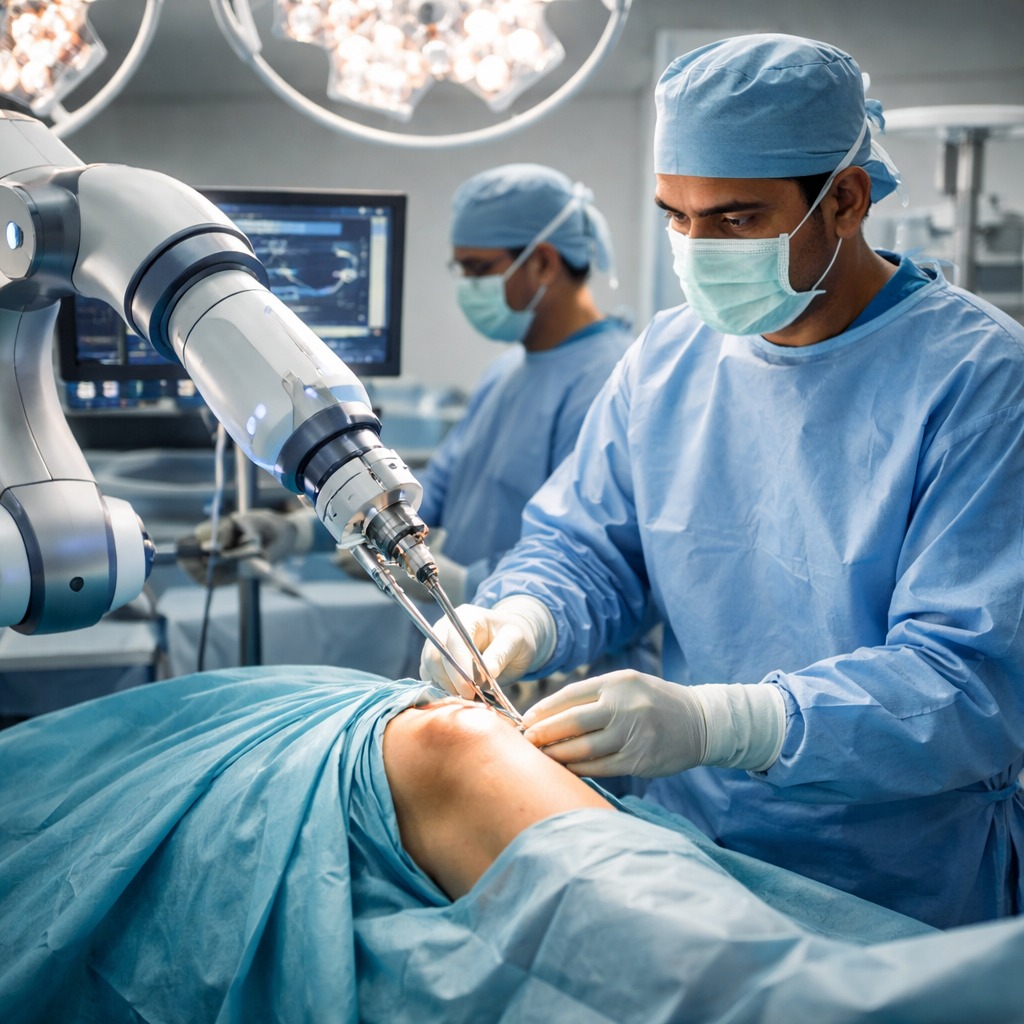
What if a machine could help doctors perform knee surgery with perfect accuracy? Sounds interesting, right? That’s exactly what robotic knee replacement does. It combines the skill of a surgeon with the precision of technology to give patients better results and a quicker return to normal life. What is Robotic Knee Replacement? Robotic knee replacement is a surgery where the doctor uses a special robotic system to help replace the damaged knee joint.Don’t worry—the robot does NOT work on its own. The surgeon is always in full control. The robot only helps the doctor perform the surgery with more accuracy. Why is Knee Replacement Needed? Our knee joint works like a hinge. Over time, the joint can wear out due to: Osteoarthritis (most common reason) Injury or accident Old age Excess weight When the knee is badly damaged, the doctor replaces it with an artificial joint so you can move without pain. Benefits of Robotic Knee Replacement Let’s look at why this modern surgery is becoming so popular. 1. More Accuracy One of the biggest benefits is high accuracy.In traditional surgery, doctors use their experience and manual tools. But with robotic technology, the system gives a 3D view of your knee. This helps the doctor: Plan the surgery better Place the implant in the exact position Avoid mistakes 2. Less Pain After SurgeryPatients often worry about pain after surgery. But with robotic knee replacement: The cuts are more precise Less damage to surrounding tissues Reduced pain after surgery 3. Faster RecoveryBecause the surgery is precise and less invasive: Patients can walk sooner Hospital stay is shorter Daily activities can start earlier 4. Better Joint FunctionRobotic surgery helps in perfect alignment of the knee joint. This means: Natural movement of the knee Better bending and flexibility Feels more like your real knee 5. Long-Lasting ResultsSince the implant is placed very accurately: Less wear and tear Better balance in the joint Longer life of the implant 6. Lower Risk of ComplicationsWith improved precision: Less blood loss Lower risk of infection Fewer chances of errors 7. Customized Surgery for Every PatientEvery person’s knee is different. Robotic technology allows doctors to: Study your knee before surgery Create a personalized plan Adjust the procedure according to your body Why Patients Prefer Robotic Knee Replacement Now let’s understand why more and more patients are choosing this modern method. 1. Trust in Advanced TechnologyPeople feel more confident when advanced machines are used. Robotic systems provide: Detailed planning Real-time feedback during surgery High precision 2. Better Results Compared to Traditional SurgeryMany patients who compare both options choose robotic surgery because: Recovery is faster Pain is less Movement is smoother 3. Short Hospital StayNobody likes staying in the hospital for long. With robotic knee replacement: Hospital stay is usually shorter Patients can go home early Less stress for family 4. Quick Return to Normal LifePatients want to get back to their routine as soon as possible. Robotic surgery helps in: Faster walking Early return to work Better quality of life 5. Recommended by ExpertsMany experienced doctors now suggest robotic surgery because of its benefits.If you are looking for the best Robotic knee replacement surgeon in Pune, make sure the doctor has good experience with robotic systems. Choosing the Right Doctor and Hospital Getting the surgery is important, but choosing the right place is even more important. 1. Experienced SurgeonAlways look for a skilled and experienced doctor. A good robotic knee replacement doctor in Pune will: Explain everything clearly Have experience with robotic surgeries Provide proper care before and after surgery 2. Advanced Hospital FacilitiesChoose a hospital that has: Latest robotic technology Good operation theatre setup Proper post-surgery care You can search for the Best Robotic Knee Hospital in Pune to get the best treatment. 3. Patient ReviewsCheck what other patients are saying. Positive reviews can help you trust the doctor and hospital. Is Robotic Knee Replacement Right for Everyone? Robotic knee replacement is helpful for many people, but not everyone needs it. Your doctor will decide based on: Your age Condition of your knee Overall health Simple Example to Understand Think of your knee like a door hinge. In traditional surgery, it’s like fixing the hinge by hand. In robotic surgery, it’s like using a precise machine to fix it perfectly. Final Thoughts Robotic knee replacement is a big step forward in medical science. It offers: Better accuracy Less pain Faster recovery Long-lasting results That’s why many patients today are choosing this modern method over traditional surgery.If you or your loved one is suffering from severe knee pain, it’s a good idea to explore this option. Just make sure you choose the Robotic knee replacement surgeon in Pune, consult a trusted doctor in Pune, and select the best Robotic knee hospital in Pune for safe and effective treatment.Your knees carry you every day—take care of them with the best options available. Our Gallery Visit Our Hospital Releted Blogs Benefits of Robotic Knee Replacement: What if a machine could help doctors perform knee surgery with perfect accuracy? Sounds interesting,… Read More Early Signs of Joint Problems Early Signs of Joint Problems You Should Not Ignore Joint problems usually do not announce… Read More Exploring Knee Replacement Revision Surgery: Knee replacement surgery, also known as knee arthroplasty, has provided countless individuals with improved mobility… Read More
Exploring Knee Replacement Revision Surgery: What You Need to Know

Knee replacement surgery, also known as knee arthroplasty, has provided countless individuals with improved mobility and reduced pain. However, in some cases, a knee replacement may need to be revised or redone due to various reasons. In this blog, we will delve into the details of knee replacement revision surgery, including when it’s needed, the reasons behind it, the procedure itself, recovery, and potential outcomes. Understanding Knee Replacement Revision Surgery: When is Knee Replacement Revision Surgery Needed? Best Knee Hospital In Pune becomes necessary when a previously implanted artificial knee joint needs to be replaced or repaired. This is typically due to various factors, such as: Implant Wear and Tear: Over time, the materials in the artificial joint may wear down, leading to joint instability, pain, and decreased function. Loosening of Components: The components of the artificial joint can become loose or detached from the bone, causing pain and reduced joint function. Infection: Infections can develop around the implant, leading to inflammation, pain, and potential damage to the surrounding tissues. Implant Fracture: Rarely, the components of the artificial joint may fracture or break, requiring revision surgery. Joint Instability: If the artificial joint doesn’t provide adequate stability or range of motion, revision surgery may be considered. Unresolved Pain: Some individuals may continue to experience persistent pain even after a successful initial knee replacement, necessitating further evaluation and potential revision. The Revision Surgery Procedure: Knee replacement revision surgery is more complex than the initial knee replacement due to the presence of existing implants and potential bone loss. The procedure involves removing the old components of the artificial joint and replacing them with new ones. This may involve using larger or more specialized implants to address the bone loss and structural changes that may have occurred since the initial surgery. The surgeon carefully evaluates the condition of the bone, soft tissues, and surrounding structures to determine the best approach for the revision surgery. The procedure may also involve addressing any infections present and optimizing bone health. Recovery and Rehabilitation: : Recovery from knee replacement revision surgery is often longer and more involved than recovery from the initial knee replacement. Rehabilitation plays a critical role in restoring function and mobility. Physical therapy, exercises, and gradual weight-bearing are integral components of the recovery process. Patients are closely monitored to ensure that the healing process is proceeding as expected. Potential Outcomes: The success of knee replacement revision surgery depends on various factors, including the extent of bone loss, the overall health of the patient, and the skill of the surgical team. While most patients experience significant improvement in pain and function, it’s essential to have realistic expectations, as complete restoration of the knee’s original state may not always be possible. Conclusion : Knee replacement revision surgery is a complex procedure designed to address issues with previously implanted artificial knee joints. While it is a more intricate surgery compared to the initial knee replacement, it offers the potential for improved pain relief and function. If you’re considering knee replacement surgery or have had a previous knee replacement that requires attention, consulting with a qualified orthopedic surgeon is crucial. They can provide personalized guidance, assess your unique situation, and recommend the most suitable treatment plan to help you regain your mobility and quality of life. FAQ’s 1. What are the early signs of joint problems? Common early signs include joint pain, stiffness, swelling, tenderness, reduced flexibility, clicking sounds in the joints, and difficulty performing routine activities. 2. When should I see a doctor for joint pain? You should consult a doctor if joint pain persists for more than a few days, worsens over time, affects mobility, or is accompanied by swelling and stiffness. 3. Can joint problems be treated without surgery? Yes. Many joint conditions can be managed with medications, physiotherapy, lifestyle modifications, weight management, and other non-surgical treatments when diagnosed early. 4. What causes joint problems? Joint issues can result from aging, arthritis, injuries, obesity, repetitive stress, autoimmune disorders, infections, and genetic factors. 5. How can the Best Orthopedic Hospital in Pune help with joint problems? The Best Orthopedic Hospital in Pune offers comprehensive diagnostic services, expert orthopedic specialists, advanced treatment options, physiotherapy, and surgical care when required. 6. What conditions are treated at an Orthopaedic Hospital in Pune? An Orthopaedic Hospital in Pune treats arthritis, sports injuries, fractures, ligament injuries, back pain, joint degeneration, osteoporosis, and various musculoskeletal disorders. 7. When is joint replacement surgery recommended? Joint replacement surgery is usually recommended when severe joint damage causes chronic pain, stiffness, and reduced mobility that do not improve with conservative treatments. 8. Why choose a Joint Replacement Hospital in Pune? A leading Joint Replacement Hospital in Pune provides experienced orthopedic surgeons, advanced surgical techniques, modern rehabilitation programs, and personalized patient care for optimal recovery. 9. Can lifestyle changes prevent joint problems? Yes. Maintaining a healthy weight, staying physically active, eating a balanced diet, and avoiding excessive strain on joints can help reduce the risk of joint-related conditions. 10. What are the most common joints affected by arthritis? Arthritis commonly affects the knees, hips, hands, feet, shoulders, and spine, causing pain, inflammation, and stiffness. Our Gallery Visit Our Hospital Related Blogs Benefits of Robotic Knee Replacement: What if a machine could help doctors perform knee surgery with perfect accuracy? Sounds interesting,… Read More Exploring Knee Replacement Revision Surgery: Knee replacement surgery, also known as knee arthroplasty, has provided countless individuals with improved mobility… Read More Ensuring Safety and Security: Robotic The field of medicine has been witnessing remarkable advancements over the years, and one of… Read More