ONP Hospitals

Trauma and Accident Surgery

Trauma and Accident Surgery

A modest bone contusion from a simple fall to a life-threatening pelvic-acetabular injury after a car collision are all examples of trauma. A team approach is required to provide the patient with the greatest care and the quickest return to their normal activities after a fracture, whether it is a simple fracture or one that is linked with damage to another essential organ.

Everything You Need To Know About Trauma and Accident Surgery

What are Trauma and Accident Surgeries?

A surgical specialty known as trauma surgery focuses on the treatment of injuries that result from traumatic events. For example, in the event of a vehicle accident, a trauma surgeon may be summoned to the emergency department to assess the patient.

Injuries caused by blunt force or penetrating trauma are known as trauma.

“Major trauma” may also be used as a synonym for trauma. Car accidents, stabbings, and gunshot wounds are among the most common trauma causes in the general population. Falls, crush injuries, and being hit by a vehicle as a pedestrian may all result in trauma.

Surgical treatment for wounds and injuries sustained in accidents is the specialty of accident surgery. Internal organs, bones, the brain, and other soft tissues may all be damaged in the process of an accident. Although no part of the body is immune to trauma, small damage (like a hammer to the finger) may develop into more serious injuries (being hit by a car traveling at a high rate of speed or falling off of a building).

Types

Accidents may have life-altering consequences for those who are involved. They not only kill a lot of people, but they may also leave a person permanently scarred. Many automobile accident injuries need surgical intervention. These treatments may need long-term medical care for the patient. Injuries that need surgery as a result of an automobile collision include the following:

Brain Injuries 

Damage to the head and brain that arise from car accidents include head trauma and brain injuries. They may be minor or severe and endure from a few weeks to many months or even years, depending on the severity of the injury and how long it affects the victim’s life. For a modest head injury, expect to pay around $85,000 in medical expenses; for serious brain damage, expect to pay up to $3 million. TBIs are predicted to cost the United States roughly $32 billion each year.

Rear-end accidents are a common cause of traumatic brain injury (TBI). Bleeding or damaged brains are invisible, unlike most other injuries. Therefore, after a rear-end collision, it is critical to monitor the conduct of the victims. Some of the warning indicators you should be on the lookout for:

  • Memory loss 
  • Seizures
  • Vocal incoherence
  • The inability to concentrate 
  • Tinnitus (ringing in the ears) is a condition that affects around 5% of people.
  • Combativeness
  • Constantly increasing headaches


Surgeries to Reset or Stabilize Bones or Address Joint Issues

A splint or cast may be all that is needed to keep a fractured or broken bone in place while it heals. Other bone fractures and breaks need surgery to aid in the healing process and correction of the fracture. If the break is more complex than a simple fracture, several procedures may be required.

When bones are broken, extensive physical rehabilitation is often required. Hip and knee replacement operations, for example, will need to be reassessed at some point in the future. Therefore, a vehicle accident lawyer will consider future operations when establishing adequate damages on behalf of a sufferer based on data from physicians and specialists.

Back and Neck Surgeries

After a catastrophic car accident, many people suffer from back and neck pain. Slipped discs to spinal cord damage are among the most common causes of back pain in adults. There are times when surgery is necessary to relieve pain and regain function, even if non-invasive treatments have been tried first. The sufferer of back or neck surgery may still need pain management medication or change employment routes.

Muscle, Tendon, and Ligament Repair Surgeries

Soft tissue damage can occur in an automobile collision. While relaxation and time may usually alleviate most stressors, some need surgical intervention. Reattaching or repositioning muscles and ligaments may be necessary in certain cases. Depending on the location of the injury, the kind of operation, and the degree of the damage, the recovery time after a soft tissue surgery may range from a few days to several weeks.

Plastic surgery

Injuries sustained in an automobile accident may cause scars, burns, and other physical deformities. Your face, neck and arms and hands may benefit from a plastic surgeon’s help in dealing with scarring. Broken glass, for example, is a common cause of lacerations in automobile accidents. In the aftermath of a vehicle accident, plastic surgery may treat extensive and uneven wounds.

Meet Our Expert Team

Dr. Kale

Dr. Amit Kale

Orthopedic Surgeon

Specialist in robotic joint replacement surgery, arthroscopy, advanced trauma and sports injuries. Also serves as a professor and postgraduate guide in orthopedic surgery.

Qualifications
  • MBBS
  • MS (Orthopedics) – Gold Medalist
  • DNB, MNAMS
  • M.Ch. Orthopedics (UK)

Experience: Over 22 years

Book Appointment
Dr. Harshal P. Saoji

Dr. Harshal P. Saoji

Orthopedic Surgeon – Arthroscopy & Sports Injury

Treats fractures, joint problems and sports-related injuries in Baner, Pune, at Dr. Saoji’s Ortho And Pain Clinic. Also sees patients at Deccan Hardikar Hospital, Shivajinagar.

Qualifications
  • MBBS – Smt. Kashibai Navale Medical College and General Hospital, 2012
  • Diploma in Orthopaedics – College of Physicians and Surgeons, Mumbai, 2019

Experience: 14 years as an orthopedic surgeon

Book Appointment
Dr. Onkar M Lande

Dr. Onkar M Lande

Orthopaedic Doctor

A renowned and experienced orthopaedic doctor in Pune, associated with some of the best hospitals in the city. Dedicated and compassionate, he handles challenging cases using the latest technology and offers patient-friendly scientific advice with the highest professional and ethical values.

Qualifications
  • MBBS

Experience: 12 years

Book Appointment
Conclusion

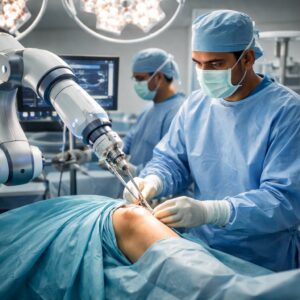
A serious vehicle accident may need extensive surgery and therapy to heal the harm done to the body.

Blogs

FAQs

Surgery may be needed after an accident when there is a severe fracture, dislocation, internal injury, damaged blood vessels or nerves, or significant damage to bones and soft tissues. The treatment depends on the type and severity of the injury.
Trauma surgery may be required for serious fractures, multiple injuries, joint dislocations, tendon or ligament injuries, and certain injuries involving the chest, abdomen, or other body areas. Immediate assessment helps determine the appropriate treatment.
Some fractures can heal with a cast, splint, or other non-surgical treatment. Surgery may be necessary when the fracture is displaced, unstable, open, involves a joint, or cannot be properly aligned without an operation.
After a serious accident, seek emergency medical care as quickly as possible. Avoid unnecessary movement of someone who may have a spine, neck, or major bone injury unless there is immediate danger. ONP Hospitals can provide emergency evaluation and treatment for serious traumatic injuries.
Doctors assess the patient's symptoms, physical condition, type of injury, and imaging results such as X-rays or CT scans. They consider factors such as bone alignment, tissue damage, stability, and the risk of complications before recommending surgery.
Recovery depends on the type and severity of the injury, the surgery performed, and the patient's overall health. Simple injuries may recover within weeks, while complex fractures or multiple injuries can require several months of rehabilitation. ONP Hospitals can provide an individual recovery and rehabilitation plan.
Trauma surgery focuses mainly on injuries caused by accidents, falls, sports injuries, or other sudden events. Orthopaedic surgery also includes planned procedures for conditions such as arthritis, joint problems, and chronic musculoskeletal conditions.
In some cases, multiple fractures can be treated during the same hospital admission or operation. However, the priority is first to stabilise life-threatening injuries and ensure the patient is medically fit for surgery. ONP Hospitals can assess complex trauma cases and determine the appropriate treatment sequence.
Seek immediate medical attention after a serious accident, especially if there is severe pain, bleeding, loss of consciousness, difficulty breathing, deformity, inability to move a limb, numbness, weakness, or suspected head, neck, or spine injury.
Yes. Physiotherapy can be an important part of recovery after trauma surgery. Depending on the injury, rehabilitation may help restore strength, movement, balance, and functional ability. ONP Hospitals can support recovery with appropriate rehabilitation based on the patient's injury and surgical treatment.

ONP Hospitals on Instagram

Stay updated with our latest health tips, patient stories, health check-up packages, and hospital events.

Our Patients Share Their Stories

Oyster & Pearl Hospitals

ONP Leela Hospital

Contact & Follow

ONP Orthopedic Department

Call us70300 49740